


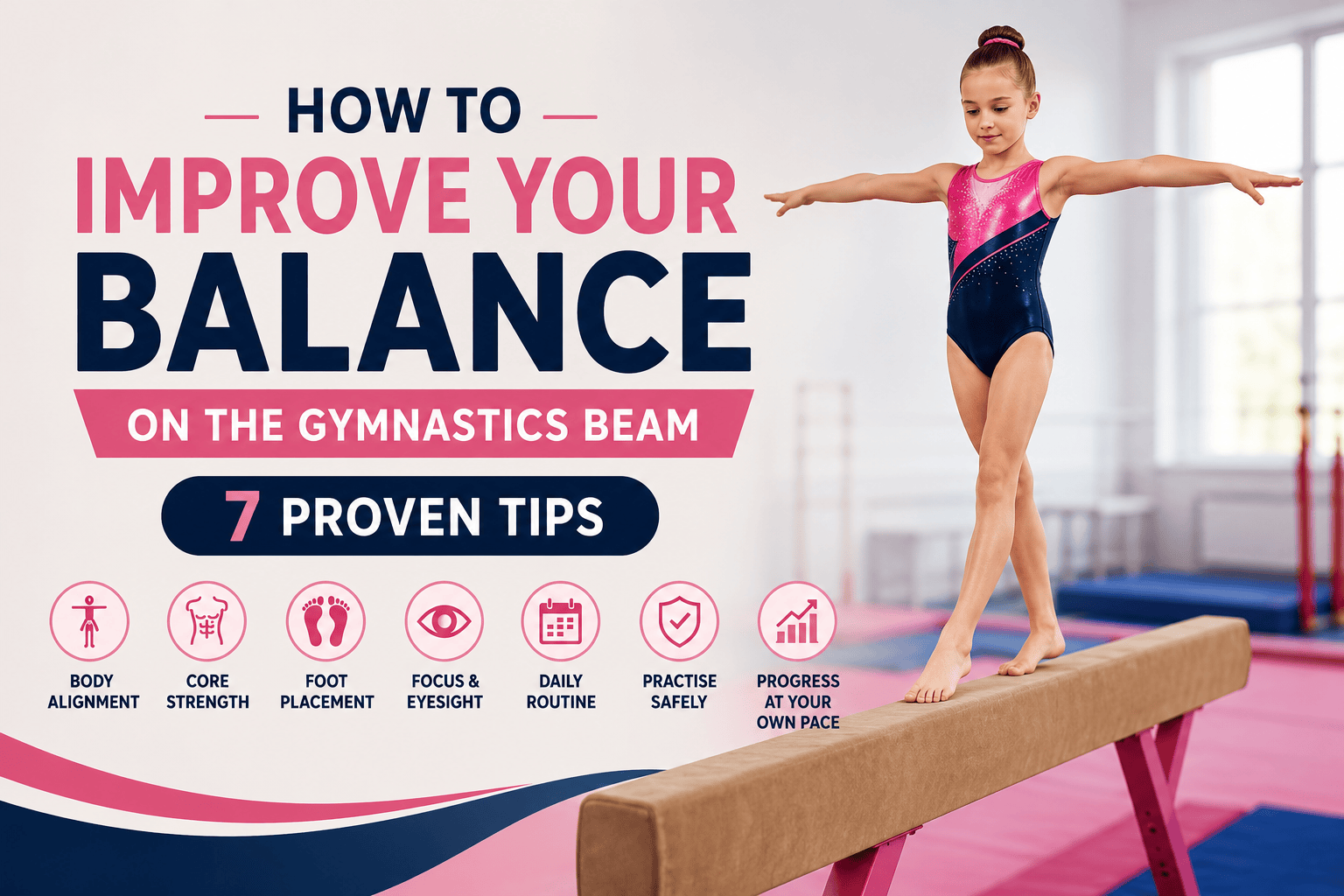
How to Improve Your Balance on the Gymnastics Beam: 7 Proven Tips

Objective
If you’ve ever felt nervous stepping onto a Gymnastics Beam, you’re not alone. The good news is that balance is a skill you can improve with the right technique and regular practice. In this guide, we’ll share seven practical tips to help you become more confident, steady and in control, whether you’re training at home, coaching young gymnasts or supporting your child’s progress.
Key Takeaways
- Gymnastics Beam skills begin with strong balance and body control.
- Small daily practice sessions often work better than long, occasional workouts.
- Core strength, posture and focus all play an important part in balancing on a beam.
- Safe home practice helps build confidence between gymnastics lessons.
- Using a quality practice beam gives you a stable surface to improve your technique.
Introduction
Have you noticed that some gymnasts make the beam look effortless while others struggle to take a few steady steps? Here’s the thing: great balance isn’t something you’re born with. It’s built through good habits, simple drills and consistent practice.
According to the NHS, activities that improve balance and coordination help children develop movement skills and physical confidence that benefit everyday life as well as sport. Those same skills are essential when training on a gymnastics balance beam, where every movement depends on stability and body control.
Whether you’re a beginner gymnast, a parent encouraging home practice or a coach helping young athletes, these tips will help you improve safely and steadily.
Table of Contents
- Why Balance Matters on a Gymnastics Beam
- Tip 1: Start with Proper Body Alignment
- Tip 2: Build Core Strength
- Tip 3: Improve Your Foot Placement
- Tip 4: Keep Your Eyes Focused
- Tip 5: Create a Daily Beam Routine
- Tip 6: Practise Safely at Home
- Tip 7: Progress at Your Own Pace
- Frequently Asked Questions
Why Balance Is the Foundation of Every Gymnastics Beam Routine
Before you think about turns, jumps or more advanced skills, you need to feel comfortable simply standing and walking on the beam.
Every movement in balance beam gymnastics begins with good balance. If your body isn’t stable, even simple skills become difficult.
That’s why experienced coaches spend plenty of time helping gymnasts improve their posture, coordination and body awareness before introducing harder routines.
Regular practice also builds confidence. Each successful step teaches your body how to react, making future movements feel more natural.
If you’re practising at home, using equipment designed for training can make a noticeable difference. AirTumble’s practice beams feature a non-slip suede surface, soft EVA foam and stable construction, helping young gymnasts practise with confidence while developing proper technique.
Tip 1: Keep Your Body Aligned from Head to Toe
One of the biggest mistakes beginners make is looking down at their feet.
Instead, keep your head up and your shoulders relaxed. Look straight ahead at a fixed point and allow your arms to stay comfortably out to the sides.
Think about standing tall rather than stiff.
Good posture helps your body stay centred over the beam, making balancing on a beam much easier.
Quick Practice
Before stepping onto the beam:
- Stand on one foot for 20 seconds.
- Swap legs.
- Keep your shoulders level.
- Breathe normally.
Simple drills like these prepare your body before every training session.
Tip 2: Build Core Strength for Better Stability
Many people believe balance starts in the feet.
In reality, your core does most of the work.
Your stomach, lower back, and hips keep your body steady whenever you move across the beam. A stronger core means less wobbling and smoother movement.
You don’t need expensive equipment to improve it either.
Try adding these exercises to your weekly routine:
|
Exercise |
Time |
| Front plank |
30 seconds |
|
Side plank |
20 seconds each side |
| Bird-dog |
10 repetitions |
| Glute bridge |
12 repetitions |
These exercises take less than ten minutes but can make a noticeable difference over time.
Tip 3: Slow Down and Improve Your Foot Placement
When gymnasts lose control of their balance and speed, it is usually the cause.
Instead of racing over the beam, put each foot with care. Your foot should be gently rolled between toe and heel, maintaining your weight in the centre.
Imagine there’s a straight line running through the middle of the beam. Every step should stay close to that line.
Here’s a simple routine many coaches recommend:
|
Drill |
Benefit |
|
Forward walk |
Improves control |
|
Backward walk |
Builds confidence |
| Heel-to-toe walk |
Improves accuracy |
| One-leg balance |
Increases stability |
Practising these movements for just 10–15 minutes several times each week is often more effective than one long session at the weekend.
Tip 4: Train Your Eyes to Stay Focused
Here’s something many beginner gymnasts don’t realise. Your eyes play a big part in your balance.
If you constantly look down at your feet, your body is more likely to sway. Instead, pick a fixed point at eye level and keep your attention there as you move along the Gymnastics Beam.
This simple practice assists your brain in judging movements more precisely and helps keep your posture stable.
Try this exercise
Before crossing the beam
- Choose an object straight ahead.
- Keep your chin level.
- Take slow, controlled steps.
- Breathe naturally instead of holding your breath.
With regular practice, you’ll notice that balancing on a beam starts to feel much more natural.
Tip 5: Follow a Short Practice Routine Every Week
Long training sessions aren’t always the answer.
What really helps is regular practice that allows your body to remember correct movement patterns.
Even 10 to 15 minutes, three or four times each week, can improve your confidence.
Sample Weekly Routine
|
Exercise |
Time |
|
Forward beam walk |
2 minutes |
|
Backward walk |
2 minutes |
| One-leg balance |
2 minutes |
| Quarter turns |
3 minutes |
| Cool down stretches |
3 minutes |
This routine works well for beginners and can easily fit around school, clubs and family life.
Tip 6: Create a Safe Space for Home Practice
If you’re practising at home, safety should always come first.
Choose a dry, flat area that has enough space for the beam. Get rid of furniture near the beam and comply with the safety instructions of the manufacturer prior to training.
Many parents find that practising at home helps children feel more relaxed because there’s less pressure than in a busy gymnastics class.
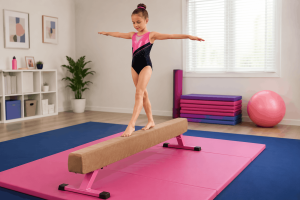
For younger gymnasts, a low practice beam is often the safest place to build confidence before moving on to higher equipment.
AirTumble offers folding and adjustable beams with a non-slip suede surface, EVA foam cushioning and stable rubber feet. Adjustable models can be raised gradually up to 46 cm, allowing children to improve their skills as their confidence grows.
Tip 7: Build Confidence One Skill at a Time
Every gymnast wants to master bigger skills quickly.
The reality is that strong basics usually lead to better long-term progress.
Instead of moving straight to turns or jumps, make sure you’re comfortable with:
- Walking forwards
- Walking backwards
- Standing on one leg
- Small pivots
- Controlled finishes
Once those movements feel comfortable, more advanced skills become much easier.
Remember, confidence grows from repeating good technique rather than rushing ahead.
Common Mistakes That Affect Balance Beam Gymnastics
Even experienced gymnasts can develop habits that make balancing harder.
Here are a few common mistakes to avoid.
| Mistake | Better Approach |
| Looking at your feet | Focus on a fixed point ahead |
| Walking too quickly | Slow each movement down |
| Tight shoulders | Stay relaxed throughout your routine |
| Missing warm-ups | Prepare your muscles before training |
| Practising without enough space | Always choose a safe training area |
Correcting just one or two of these habits can make a noticeable difference.
A Real-Life Example
Imagine an eight-year-old gymnast preparing for her weekly club sessions.
At first, she struggled to walk across the gymnastics balance beam without stepping off several times.
Her parents introduced a simple routine at home using a practice beam. She trained for around 15 minutes after school, focusing on posture, foot placement and balance drills.
After six weeks, her coach noticed she was moving with much more control and confidence during lessons.
This shows that small, regular practice sessions often produce better results than trying to do everything at once.
Small Steps Today Lead to Bigger Skills Tomorrow
Improving your balance isn’t about being perfect from day one.
It’s about practising the basics until they become second nature.
By working on posture, core strength, focus and controlled movement, you’ll feel more comfortable every time you step onto a Gymnastics Beam.
Regular home practice offers you additional chances to increase your confidence between training sessions. With equipment that is safe for developing and beginner gymnasts, each training session is an opportunity to grow. AirTumble’s selection of practice beams has been designed with these objectives in mind. They offer safe, cushioned and stable options that are suitable for both club and home use for all skill levels.
Ready to help your child or students feel more confident on the beam?
Explore AirTumble‘s selection of practice beams that are designed to help you train at home. From simple models that fold and adjustable beams to increase as you gain experience, there’s equipment that is safe and regular exercise.
Frequently Asked Questions
How can beginners improve their balance on a Gymnastics Beam?
Start with simple walking drills, strengthen your core and practise regularly on a low practice beam. Short, consistent sessions help build confidence and control.
Is practising on a beam at home safe?
Yes, provided you use equipment designed for home training, place it on a flat surface and follow the manufacturer’s safety instructions.
How often should children practise balancing on a beam?
Around 10 to 15 minutes, three to four times each week, is usually enough to improve technique while keeping practice enjoyable.
What muscles help improve balance beam gymnastics?
Your core, glutes, ankles and leg muscles all work together to keep your body stable and maintain proper posture throughout each routine.
What should you look for in a home practice beam?
Choose a beam with a non-slip surface, good cushioning, stable support and dimensions that closely match a standard gymnastics beam. Folding or adjustable options are also useful for growing gymnasts.