


Objective
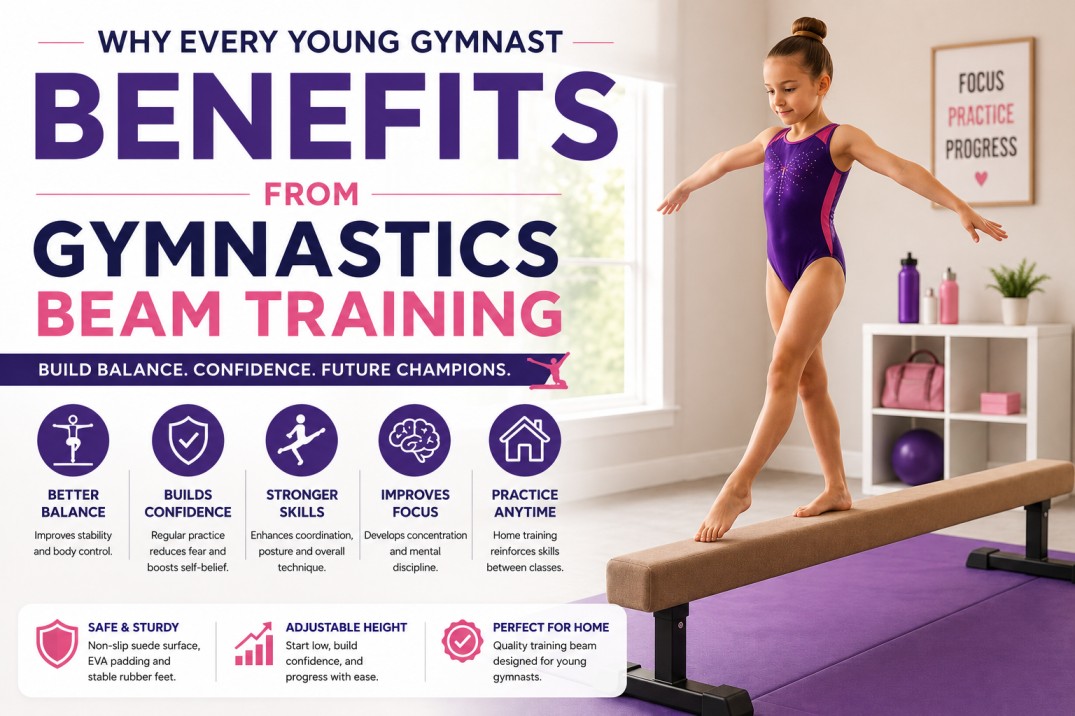
This guide explains the reasons why Gymnastics Beam training is one of the most valuable parts of a young gymnast’s development. It will show you how regularly practising helps improve balance, confidence, co-ordination and control of the body. It will also explain the reasons why home-based training helps speed up progression between sessions at the club and also how to choose the appropriate beam for safe training.
Key Takeaways
- Gymnastics Beam practice improves balance, coordination and posture.
- Regular home sessions help children remember skills learned at gymnastics classes.
- A quality gymnastics training beam provides a safe way to build confidence.
- Choosing the right child’s gymnastic beam supports gradual skill development.
- Short, consistent practice sessions often produce better results than occasional long sessions.
Introduction
As your child grows comfortable in gymnastics is satisfying; however, many parents observe that just one or two weekly sessions of club are not enough to ensure continuous improvement. Skills such as balance, posture and body control improve through regular practice, not simply by spending longer at the gym.
Did you know? The UK Chief Medical Officers recommend that children and young people complete an average of 60 minutes of physical activity every day, including activities that strengthen muscles and improve coordination at least three days each week. Gymnastics is an excellent way to help children meet these recommendations while developing lifelong movement skills.
If your child wants to feel more confident on the beam, home practice using a Gymnastics Beam can make a noticeable difference. Let’s look at why.
Table of Contents
- Why Gymnastics Beam Training Matters
- Skills Your Child Develops Through Regular Beam Practice
- Why Home Gymnastics Beam Training Works
- Choosing the Right Gymnastics Beam
- Safe Beam Training Tips Every Parent Should Know
- A Simple Weekly Beam Practice Plan
- Frequently Asked Questions
Why Gymnastics Beam Training Matters
The balance beam is much more than another piece of gymnastics equipment. It teaches children how to control their movements, stay focused and build confidence one step at a time. These abilities help in gymnastics and carry over into many everyday activities.
Whether your child has just begun their lessons or already competes regularly, routine practice in Gymnastics Beam training provides important extra training to aid in long-term development.
Build Strong Foundations Before Learning Advanced Skills
Every gymnastics routine begins with the basics. Before children attempt leaps, turns or more advanced movements, they need to feel comfortable walking confidently along the beam.
Practising on a training beam helps children:
- Develop better balance
- Improve body awareness
- Learn accurate foot placement
- Build correct posture from an early stage
These early habits become the building blocks for more advanced routines later.
Confidence Comes Through Regular Practice
Many gymnasts in their teens feel anxious at first when they are stepping onto the beam. This is completely normal.
This is the truth: confidence increases when kids repeat basic movements until they’re comfortable. Balance, walking and performing simple exercises on a gymnastics training beam remove doubt and replace it with confidence.
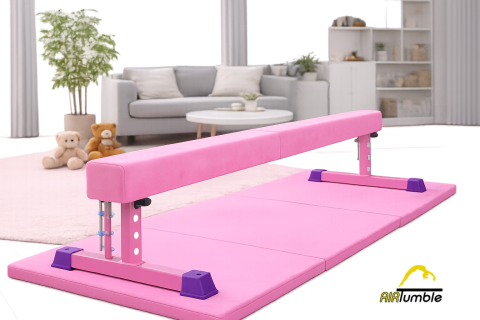
The adjustable beam of AirTumble allows gymnasts to practice at the floor before gradually increasing their height as they improve their skills. This gradual increase in height allows children to feel at ease while learning new skills.
Better Technique Starts with Consistency
Gymnastics rewards good habits.
Children who practise regularly often show:
- Smoother movement
- Better balance during routines
- Improved coordination
- Greater control over every skill
Rather than rushing difficult tricks, they build strong technique that supports future progress.
Skills Your Child Develops Through Regular Beam Practice
Parents often think beam work only improves balance. In reality, practising on a Gymnastics Beam develops a wide range of physical and mental skills that benefit every area of gymnastics.
Better Balance and Coordination
The beam challenges children to control every movement.
Each step encourages them to adjust their posture while maintaining stability. Over time, this improves:
- Overall balance
- Coordination
- Spatial awareness
- Movement accuracy
These improvements often carry across to floor routines, vault and other gymnastics events.
Stronger Core and Body Control
Balancing on a beam naturally activates the muscles around the stomach, hips and lower back.
Instead of completing repetitive exercises, children strengthen their core while enjoying gymnastics. Better core strength also supports safer movement and improved posture during training.
Improved Focus and Concentration
Beam practice requires children to stay fully focused on every movement.
As they complete routines, they learn to:
- Concentrate for longer periods
- Follow instructions carefully
- Stay calm under pressure
- Think about technique before speed
These skills often help children outside gymnastics too, including at school and in other sports.
According to AirTumble, its gymnastics beams have been developed alongside gymnastics clubs and feature a solid wood beam, non-slip suede surface, EVA foam padding and stable rubber feet to provide a comfortable and supportive practice experience for young gymnasts training at home.
Why Home Gymnastics Beam Training Works
Attending gymnastics classes once or twice a week gives children expert coaching, but improvement happens through regular practice. A few short sessions at home help reinforce the techniques they have already learned, making every club lesson more productive.
Here’s the thing: children don’t need hours of training. They need consistency. Spending just 10 to 15 minutes on a Gymnastics Beam a few times each week helps build confidence, strengthens muscle memory and keeps skills fresh between classes.
More Practice Without More Club Sessions
Gymnastics is a skill-based sport. The more often children repeat the correct movements, the more natural those movements become.
Home practice helps your child:
- Remember coaching instructions more easily.
- Improve balance and body control.
- Build confidence before trying new skills in class.
- Feel prepared rather than nervous during lessons.
Instead of spending the first part of each class remembering previous skills, your child can focus on learning something new.
Why a Gymnastics Training Beam Is Ideal for Home
A dedicated gymnastics training beam allows children to practise safely in a familiar environment.
AirTumble’s adjustable beam is designed specifically for home use and includes features that support young gymnasts as they progress:
- Adjustable height from floor level up to 46 cm.
- Solid wood beam for stability.
- EVA foam padding for extra comfort.
- Non-slip suede surface for improved grip.
- Rubber feet to protect floors and reduce movement during practice.
- Manufactured to comply with European Standard BS EN 12432.
These features allow beginners to start at floor level and gradually increase the height as their confidence grows.
Small Sessions Create Big Improvements
Many parents think children need long training sessions to improve.
In reality, short and focused practice often works better.
A simple routine could include:
- Walking forwards and backwards.
- Balance holds.
- Knee walks.
- Quarter turns.
- Controlled jumps.
- Safe dismount practice.
Keeping sessions enjoyable encourages children to practise regularly without feeling overwhelmed.
Choosing the Right Gymnastics Beam
Not every beam is suitable for every gymnast. Choosing equipment that matches your child’s age, ability and available space makes practice safer and more enjoyable.
Folding Beam or Adjustable Beam?
Both options are excellent, but they suit different needs.
| Feature | Folding Beam | Adjustable Beam |
| Best for | Beginners | Beginners to Intermediate |
| Height | Floor level | Floor to 46 cm |
| Storage | Folds in seconds | Easy to assemble |
| Home Use | Excellent | Excellent |
| Confidence Building | Very Good | Excellent |
When your kid is only beginning to learn about gymnastics, a folding beam provides a low-level training surface that lessens the risk of falling. As they get more confident and their confidence grows, an adjustable beam will allow them to take an opportunity to practice at higher heights.
Features Worth Looking For
When purchasing the gym beam for your child, make sure you be sure to consider safety and quality more than the appearance.
Look for:
- Non-slip suede covering.
- EVA foam with high density.
- Stable wooden construction.
- Rubber feet for extra grip.
- Easy assembly.
- Durable materials.
- Appropriate beam length for home practice.
AirTumble’s beams are available in folding and adjustable models, making them suitable for beginners, schools, clubs and young gymnasts preparing for competitions. The collection also includes lightweight designs that are easy to move and store while maintaining a realistic gymnastics feel.
Safe Beam Training Tips Every Parent Should Know
Helping your child practise safely is just as important as helping them improve.
Create a Safe Practice Space
Before every session:
- Place the beam on a clean, dry and level floor.
- Leave enough space around the beam.
- Use suitable gymnastics mats underneath and around the beam.
- Remove furniture or objects that could become hazards.
Supervise Every Practice Session
Children should never practise difficult skills without supervision.
AirTumble recommends that:
- Only one gymnast uses the beam at a time.
- New skills are introduced under the guidance of a qualified coach.
- The beam is inspected before every use.
- Damaged equipment should never be used.
Avoid These Common Mistakes
Many young gymnasts progress faster by avoiding unnecessary risks.
Try not to:
- Rush advanced tricks.
- Skip warm-up exercises.
- Practise without safety mats.
- Ignore your coach’s advice.
- Train when the beam is unstable or damaged.
Expert Insight
Many coaches in gymnastics believe that confidence can be built by repetition, not through difficulty. The child who is confident in performing simple movements each week typically advances faster than a child who is only practising advanced skills occasionally. Regular practice leads to more skill, stronger stability and self-confidence.
Real-Life Example
Sophie’s parents observed that she liked gymnastics, but she was anxious when she was doing beam routines since she attended only one session per week.
After three practice sessions at home with the beam of a gymnastic for children, Sophie became noticeably steadier after a few months. Her coach said that she was more balanced and moving more confidently in the routines.
The most significant change was not the coaching; it was simply regular practice.
A Simple Weekly Gymnastics Beam Practice Plan
Consistency is more important than long practice sessions. Children learn best when they repeat basic skills regularly, so aim for three or four short sessions each week rather than one long session.
The plan below focuses on building confidence first and then gradually improving technique.
| Day | Practice Focus | Time |
| Monday | Walking forwards, backwards and side steps | 10 minutes |
| Wednesday | Balance holds, knee walks and simple turns | 10 minutes |
| Friday | Small jumps, controlled landings and posture | 10–15 minutes |
| Weekend | Combine skills into a short beam routine | 15 minutes |
This routine allows children to improve gradually without feeling overwhelmed. As their confidence grows, their gymnastics coach can recommend new skills to practise safely at home.
Track Progress One Step at a Time
Children tend to be motivated when they are able to be aware of how much they’ve progressed.
Simple methods of evaluating the progress of your project include:
- Recording a brief beam routine each month.
- Celebrating small accomplishments like balancing longer or taking more smoothly.
- Aiming for a specific objective for every exercise session.
- Requesting their instructor for feedback following every class.
The small improvements quickly become visible advancement.
Coach’s Tip
Many coaches have noticed that children who learn the basics regularly often advance faster than those who are only attempting advanced techniques occasionally.
Body posture, balance, and control are the core of every beam workout. When these abilities become natural, the process of learning new techniques becomes much simpler. This is why practising regularly on a gymnastics beam during club sessions can be a significant factor in long-term growth.
Build Confidence One Practice at a Time
Regular training using the Gymnastics Beam gives young gymnasts the chance to build coordination and balance in training sessions. With the correct child’s gymnastic beam, children are able to improve their skills in a safe environment and progress in a way that’s appropriate for their specific needs. Adjustable beams from AirTumble, which fold and unfold, are specifically designed to help in home gyms with features such as anti-slip suede flooring, as well as EVA foam cushions. The beams also come with levels that can be adjusted, which makes training enjoyable and secure.
Help Your Child Practise with Confidence
If you’re looking for a reliable gymnastic beam for kids that supports safe and enjoyable home practice, explore AirTumble’s range of folding and adjustable gymnastics beams.
Frequently Asked Questions
1. Why is a Gymnastics Beam important for young gymnasts?
A Gymnastics Beam aids children in improving their balance as well as coordination, posture and self-confidence. Regular practice helps strengthen body control, which helps in improving performances in other gymnastics competitions.
2. What age can a child start using a child’s gymnastic beam?
Many youngsters begin basic beam training at around 4 or 5 years old, provided that they make use of age-appropriate equipment, train under the supervision of an adult and follow the guidance of a certified gymnastics instructor.
3. How often should my child use a gymnastics training beam?
Three to four practice sessions a week, ranging from 10-15 minutes, will usually suffice to build abilities without creating fatigue. It is better to practice consistently than sporadic long sessions.
4. Is practising at home safe?
Yes, when children use a quality training beam, practise on a flat surface with suitable safety mats and are supervised by an adult. New skills should always be introduced by a qualified coach.
Leave a comment