


What if one smart piece of home equipment could support your child’s training today and still feel useful years from now? That question sits at the heart of home gymnastics. Parents want progress, safety, and value, not something that gets outgrown in a few months.
Here’s the thing. Balance work is not just about learning skills. According to youth sports research shared by leading sports education bodies, balance training supports coordination, posture, and controlled movement in children. That’s why coaches often recommend structured beam practice early on. At home, the right gymnastics beam can create that same steady learning environment without pressure.
In simple terms, a home beam helps children move from basic balance to controlled routines at their own pace. It supports muscle memory, confidence, and focus. This guide looks at four home beam options that grow with your child, using real product ideas from AirTumble and practical advice parents can actually use.
Key takeaways
- Why adjustable beams support long-term skill growth
- How beam width and height affect safety and balance
- Which home beams suit beginners, intermediates, and advanced learners
- How to choose one beam instead of replacing equipment every year
Let’s break it down properly.
Choosing the Right Home Beam for Long-Term Skill Development
When children start gymnastics at home, growth happens quickly. One month, they are learning to walk the beam. Soon after, they want turns, kicks, and short routines. That’s why choosing equipment that adapts matters.
A well-designed home beam will allow for constant progress, not making early upgrades.
What Makes a Beam Suitable for Growing Gymnasts
Several factors decide whether a beam lasts through different stages:
- Adjustable height to move from floor practice to raised work
- Stable base that stays firm on indoor surfaces
- Comfortable surface grip to reduce slips
- Easy storage, especially for family homes
These points matter more than looks. A beam that is safe can help children practice more frequently.

Understanding Beam Width, Balance, and Skill Progression
Parents frequently ask how big the gymnastics beam is in their home setting. Official competition beams are narrow, but home practice beams are wider. This extra width gives beginners room to find balance without fear. As skills improve, children learn control first, not speed.
From Floor Practice to Elevated Confidence at Home
Most young gymnasts begin at floor level. It feels safer, and mistakes are easier to manage. Over time, height builds confidence.
AirTumble Rainbow Adjustable Beam for Early Learners
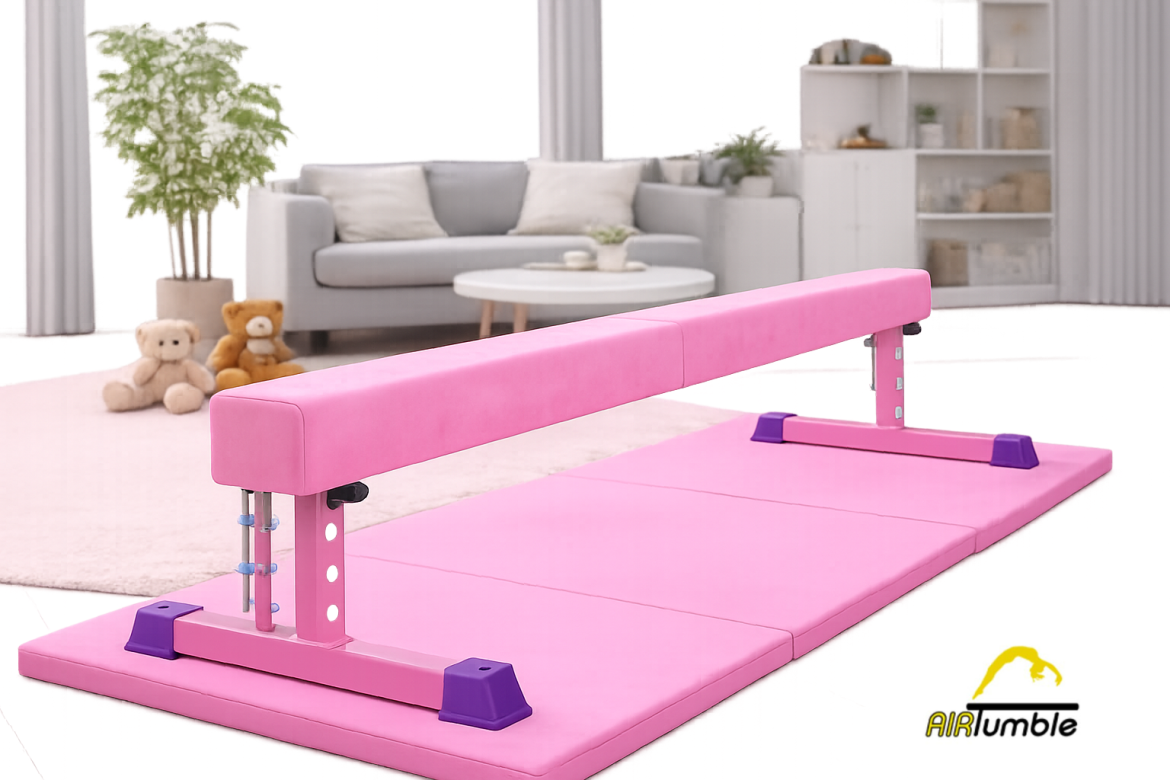
This style of beam starts close to the floor and adjusts up to around 46cm. That range suits early practice and controlled progress. Parents often use it as a child’s gymnastic beam because it allows walking drills, knee work, and early balance routines without pressure.
We’ve seen families place it in a living room corner with a mat underneath. Short daily sessions feel manageable and relaxed.
Folding Practice Beams for Consistent Daily Training
Folding designs support routine practice without taking over the house. When stored away easily, children practise more often. This is where a gymnastics beam for home really makes sense. It fits real family spaces, not just training rooms.

Supporting Skill Progression Without Replacing Equipment
Replacing equipment every year gets expensive and frustrating. Adjustable designs reduce that problem.
Adjustable Height Beams for Intermediate Skill Building
As children gain control, height matters more. Adjustable beams support:
- Better posture control
- More stable balance in turns
- A safer way to prepare for routines that are club-level
The well-thought-out, balanced beam for gymnastics gives you an increase in height without feeling abrupt or threatening.
Inflatable Gymnastics Beams for Versatile Home Use
Inflatable beams add comfort and flexibility. They can be used by people with different levels of skill and minimise the impact when slips occur. Many families employ them in conjunction with fixed beams to ensure that their practice is diverse and stress-free.
How Parents Can Match Beams to Their Child’s Ability Level
Choosing the right beam is not about age alone. Readiness and confidence matter more.
Beginner Stage – Confidence, Coordination, and Fun
At this stage, a wide, low child’s gymnastic beam supports walking drills and basic posture control. Children learn without fear, which keeps practice positive.
Intermediate to Advanced – Stability, Height, and Control
As skills improve, children benefit from firmer surfaces and raised practice. A quality gymnastics balance beam allows controlled turns and short routines while keeping safety in focus.
Safety, Setup, and Smart Home Training Practices
Safe setup builds trust and helps children practise more often.
Safe Placement and Supervised Practice at Home
Good habits include:
- Placing the beam on flat flooring
- Using soft mats nearby
- Warming up before practice
- Short, supervised sessions
When to Increase Height or Difficulty
Parents often ask again how wide the gymnastics beam is for safe progression. Width stays consistent, but height should change slowly. In many homes, a well-chosen gymnastics beam for home handles this step-by-step growth smoothly.
Home Gymnastics Beam Comparison Table
| Beam Type | Best For | Key Benefit |
| Adjustable floor-to-raised beam | Beginners to intermediate | Gradual confidence building |
| Folding practice beam | Daily home routines | Easy storage |
| Inflatable beam | Mixed skill levels | Soft landings |
| Raised adjustable beam | Intermediate training | Control and posture |
Why the Right Beam Shapes Long-Term Gymnastics Progress
Home practice works best when equipment grows alongside the child. The right gymnastics beam will help stability, confidence, and steady progress without over-training the development of skills. That’s why families all over the UK are awestruck by the quality of home equipment made by brands like AirTumble that are known for their functional designs that fit in with modern homes.
If you’re setting up a home practice space that supports real progress, explore AirTumble airtrack options built for safety, flexibility, and long-term use. One smart choice today can support your child’s training for years to come.
FAQ’s
- At what age can a child start using a home beam?
Many children start basic balance work around age four with supervision.
- Is an adjustable height really necessary?
Yes. It supports safe progress without replacing equipment.
- How much space do we need at home?
Most beams fit in small rooms with clear floor space.
- Can beginners practise without a coach?
Yes, with simple drills and adult supervision.
- How long does one beam usually last?
A good adjustable beam can support several years of training.
Leave a comment