


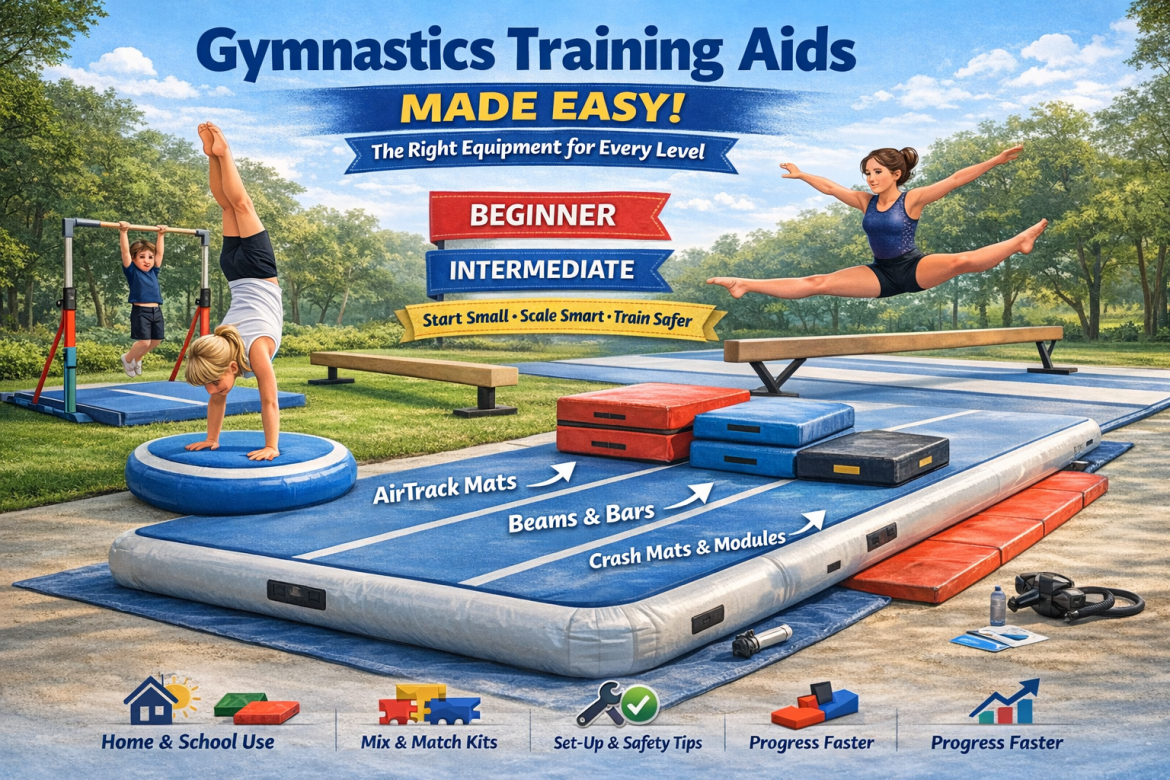
Objective:
We help parents, gymnasts, coaches, and schools choose the right equipment at each stage, beginner, intermediate, and elite, so training feels safer, more consistent, and results‑driven. The guide maps real product types (tracks, beams, bars, modules, and mats) to clear skill goals, spaces, and budgets, with practical tips for set‑up, safety, and progression.
Key Takeaways
- Start small, scale smart: pick forgiving surfaces for first skills, then move up to longer, thicker mats with more rebound as routines get harder.
- Indoor/outdoor flexibility matters: quick setup, ground protection and easy storage keep practice consistent at home and school.
- Think in systems: a base mat plus modules (AirSpot, AirBlock, roll‑out floors, crash mats) covers drills from shaping to landings.
Introduction
When we say Gymnastic Training Aids, we mean the smart add‑ons that help you learn skills faster and with less impact, think inflatable Track tumbling mats, AirSpots, beams, bars, crash mats, and simple strength tools. The idea is simple: match the aid to your goal and your space so you get more quality reps with better form and fewer sore joints. Here’s the thing: Children and young people should get around 60 minutes of moderate to vigorous activity daily, with strength and balance work during the week; gymnastics counts toward that in a big way.
Did you know? UK shoppers rate one leading supplier 4.9/5 from 159+ reviews, praising quality kit and helpful service, useful when you want equipment that lasts.
Table of Contents
- Choosing the right aids for gymnastics training at every level
- Strength, balance, and apparatus that speed progress
- Safety, setup, and real‑world logistics
- Level‑by‑level kit list (with specs)
- Mini case notes from real users.
- Expert buying tips
- FAQs
- A better finish line (wrap‑up) + CTA
Choosing the right aids for gymnastics training at every level
Why this matters: buying the right tool at the right time boosts confidence, protects joints, and keeps training fun. Start with your outcome (cartwheels vs handsprings vs advanced tumbling), then match thickness, length and add‑ons.
AirTumble Track tumbling mat basics for beginners (home‑friendly)
A 10–15 cm inflatable track gives a soft, forgiving feel for first skills and shaping drills, and it packs away fast for gymnastics home practice. Add an AirSpot or AirBlock to isolate jumps, handstands, or round‑off drills without beating up wrists and ankles. It’s also easy to set up indoors or in the garden with a pump included.
Inflatable gymnastics mats with more rebound (for growing skills)
Moving to 20 cm depth adds spring for walkovers and handsprings while still feeling stable underfoot. Training sets that bundle a base track with modules keep sessions varied and focused. Gymnastics equipment for home that stores quickly means more short, frequent practices, the sweet spot for progress.
Club‑length AirTumble Track options for advanced tumbling (performance feel)
For high‑volume sessions, wider (up to 2 m), longer (10–12 m), 20 cm tracks provide strong rebound, adjustable pressure, and durable materials tested for air retention. These suit clubs and schools that need repeatable take‑offs and landings over extended lengths.
Strength, balance, and apparatus that speed progress
What this really means is… mats alone don’t build shape, core, and shoulder power. Pair them with simple tools you’ll actually use week in, week out.
Balance beam training for precise footwork (home setup)
Floor‑level and adjustable beams help tidy line, turns, mounts, and safer dismounts before you raise the height. They pair well with soft landings and short technical drills between mat sets.
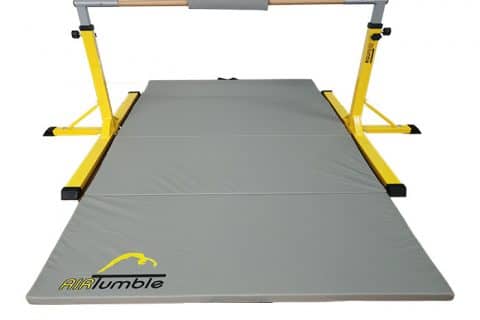
Foldable gymnastic bars for small spaces (form and shaping)
Height‑adjustable, space‑saving foldable gymnastic bars make shaping casts, pullovers and core drills doable in a spare room. If you want a sturdier feel, a gym bar home setup helps with repeat reps without constant re‑rigging.
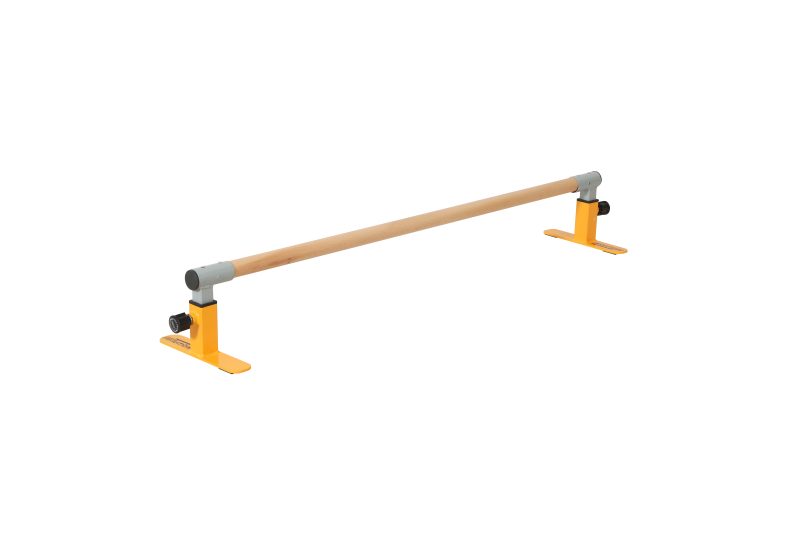
Parallettes & handstand aids (control and strength)
Parallettes and a handstand bar at adjustable heights teach stacked shoulders, wrist comfort, and clean entries, skills that pay off when you take shapes onto the track.
Safety, setup, and real‑world logistics
Let’s break it down: reliable sessions depend on safe surfaces, correct pressure, and fast pack‑away, especially if space is tight.
Inflatable gymnastics mats: pressure, surfaces, and outdoor use
Use the included pump and check firmness before practice. Outside, keep to flat ground and lay a ground sheet under the mat to protect from stones and abrasion; avoid wet or very hot conditions that affect pressure.
Crash mats and roll‑out floors for landing zones
Crash mats help when trying a new dismount or higher‑impact skill; roll‑out carpet floors make quick work of larger training areas and pack down in minutes.
Expert safety note: “British Gymnastics regards the health, safety and welfare of all members to be of paramount importance.” Keep sessions supervised, follow progressive learning, and use appropriate matting for the task.

Level‑by‑level kit list (with specs)
Use this as a quick chooser when you’re short on time.
Pro tip: if you’re training outside, keep a tarp under the mat and clear run‑offs at both ends.
Mini case notes from real users.
- Parent + young gymnast: reviews often call out quick setup and friendly support, which makes short after‑school sessions doable, and that leads to steadier progress.
- School PE: easy inflate/deflate and tidy storage help you switch groups fast between lessons.
- Club coach: longer, thicker tracks with pressure control deliver repeatable take‑offs across sessions, week after week.
Expert buying tips (so you buy once, not twice)
- Thickness & pressure: 10–15 cm suits shaping and first skills; 20 cm supports harder tumbling. Adjust pressure for softer learning vs. firmer performance.
- Length & width: 3–5 m works in most rooms for basics; 10–12 m supports longer series in clubs. Wider tracks feel safer for newer athletes.
- Materials, warranty, accessories: drop‑stitch fabrics, reinforced seams, and included pumps/repair kits are practical signals of quality; a clear warranty adds peace of mind.
Quote to keep in mind: British Gymnastics’ guidance frames safe participation as a non‑negotiable. Good equipment helps, but progressive coaching and risk assessment matter just as much.
A better finish line: train smarter, feel safer, progress faster
The right Gymnastic Training Aids help you practise more often, protect joints, and keep training fun, from first cartwheel to elite passes. The Airtumble Track is a great option for athletes who want a springy, supportive surface for safer landings and smoother skill progressions. Choose the depth, length, and add-ons that match your goals today, and keep an eye on what you’ll need next term.
Ready for better sessions at home or in the club? Pick your level, choose your mat and add-ons, and set up a space that makes progress feel natural. Start today with a trusted UK supplier backed by real customer reviews.
Frequently Asked Questions (FAQ)
What size AirTumble Track should a beginner choose at home?
Most homes suit 3 m × 1 m tracks for basic tumbling and shaping. If you have more room or a taller gymnast, go longer. Keep a clear space at both ends.
Is a 20 cm thickness better for tumbling?
It gives more bounce and impact absorption, which helps with walkovers and handsprings. For first skills and shaping, 10–15 cm still works well.
Can we use an AirTumble Track outside?
Yes, on flat, clean ground with a ground sheet underneath. Avoid wet surfaces and very hot sun; re‑check pressure as temperature changes.
What extras should we buy with an AirTumble Track?
An electric pump, repair kit, and at least one module (AirSpot or AirBlock) for targeted drills; crash mats help with landings.
Do we need crash mats if we already have an AirTumble Track?
For learning new dismounts or higher‑impact landings, yes. Use them to keep attempts safe while form improves.
Leave a comment