


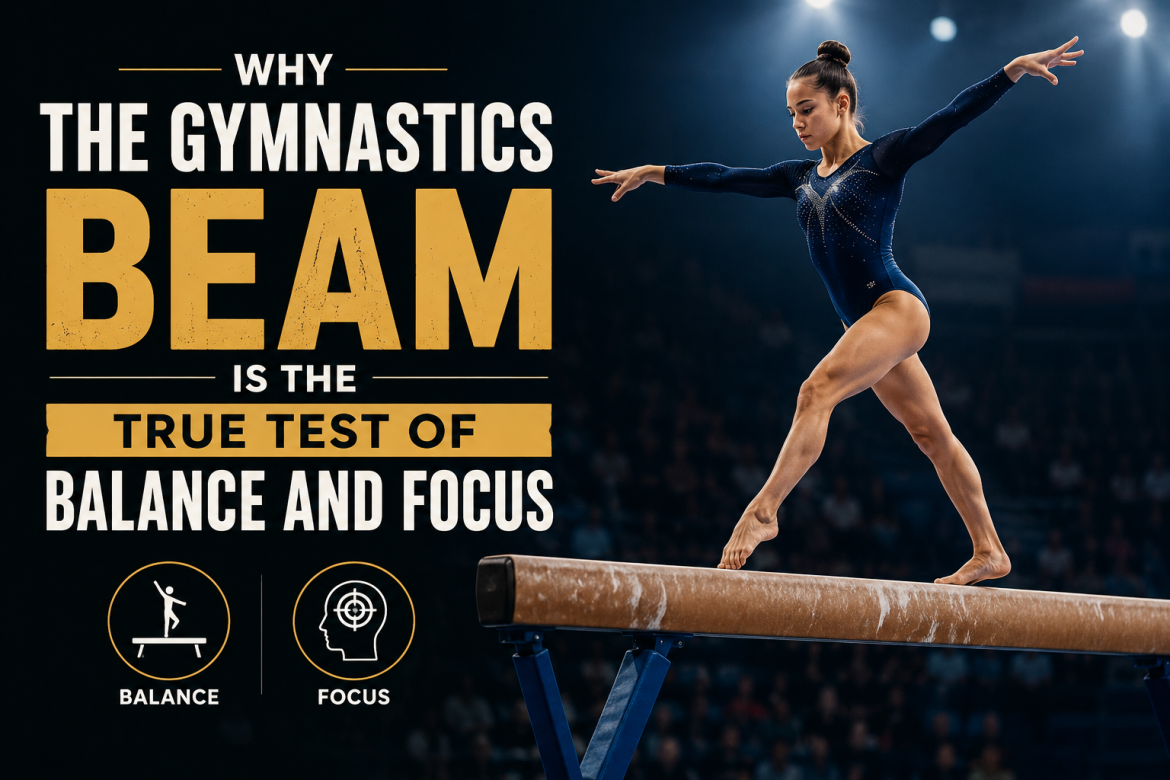
The objective of this blog is to provide an explanation of the reasons why the balance beam is one of the most crucial gymnastics fundamentals, especially to build the ability to balance, focus, posture and confidence in younger gymnasts.
We aim to help parents, coaches, and athletes understand how structured beam practice, especially using safe, low‑height and foldable options, supports long‑term skill development both at home and in club environments.
Key Takeaways
- Why balance beam training tests the brain as much as the body
- How narrow surfaces improve focus, posture, and confidence
- Why low‑height practice matters for long‑term progress
- How safe home practice supports consistent development
Introduction
One narrow beam can expose hesitation, courage, calm, and control faster than any floor routine ever will.
Here’s the thing most people don’t realise: gymnastics is not only about strength or flexibility. It’s about what happens when your body and mind are asked to work together under pressure. That’s why the Gymnastics Beam has always been considered one of the most honest pieces of equipment in the sport.
Did you know?
Sports education bodies consistently point out that balance‑based training improves focus, posture, and body awareness in young athletes. Coaches often begin beam work at floor level to help gymnasts build confidence before height is ever introduced.
This blog describes the reasons why beams can challenge focus and balance, unlike anything else and how it can aid in safe training at home as well as at clubs. It also explains what it means for gymnasts of all ages, parents, coaches, and instructors throughout all of the UK.
Table of Contents
- Why Balance and Mental Control Matter in Gymnastics Performance
- What Makes the Beam the Ultimate Skill Filter in Gymnastics
- How Beam Training Builds Balance, Focus, and Discipline Over Time
- Why Starting Low Is Critical for Young Gymnasts
- Training at Home Without Compromising Technique or Safety
- How Balance Training Helps Beyond Gymnastics
- Choosing the Right Beam for Confidence‑Led Progression in the UK
- Balance Training Comparison Table
- Frequently Asked Questions
- Balance Isn’t Just a Skill – It’s a Mindset Built Step by Step
- Call to Action
Why Balance and Mental Control Matter in Gymnastics Performance
Balance and focus sit at the core of every successful routine. Without them, even strong gymnasts struggle to stay calm, controlled, and accurate. On wider equipment, small errors often go unnoticed. On a beam, they stand out straight away.
Neuromuscular Control and Body Awareness
Balance training strengthens proprioception. That’s the body’s ability to sense position, movement, and alignment without having to think about it. When a gymnast steps onto a gymnastic balance beam, the surface forces the body to react quickly and precisely.
Feet placement, hip alignment, and core engagement all need to work as one. Over time, the nervous system learns how to correct small movements before they become mistakes. This fine-tuning is what helps young gymnasts move with confidence instead of tension.
Focus Under Pressure
Mental control matters just as much as muscle memory. Even when you’re on the ground, standing on a narrow surface requires focus. The mind cannot drift as the balance is dependent on constant attention.
The coaches often observe that beam exercises will reveal which gymnasts are fast and which are calm. Slowing down, breathe and remaining present is a trait that can be applied to competition and daily life.
What Makes the Beam the Ultimate Skill Filter in Gymnastics
The beam doesn’t allow shortcuts. Every step, pause, and correction becomes part of the training process. What this really means is that gymnasts can’t rely only on power or speed to get through routines.
Narrow Surface, Maximum Precision
Unlike the floor, the beam leaves no room for wide steps or loose posture. A slight foot turn or shifted hip can throw off balance instantly. That’s why gymnasts often say the beam “feels harder” even when routines look simpler.
Training on gymnastic balance beams helps athletes understand alignment in a practical way. Over time, they stop forcing movements and start allowing balance to guide them.
Fear Management and Confidence Building
The fear of failure is common, particularly for gymnasts who are young. Low beams offer them the chance to deal with the fear of uncertainty in a safe manner. Working at the floor level creates trust in their own abilities.
One coach shared how a hesitant eight‑year‑old gained confidence simply by completing calm, slow walks across a folding beam during each warm‑up. Within weeks, posture improved, and fear reduced, without adding difficulty.
Every steady step builds belief. That belief changes everything.
How Beam Training Builds Balance, Focus, and Discipline Over Time
Beam work rewards patience. Progress often feels slow, but that steady pace forms strong habits.
Repetition, Routine, and Focus
Repeating basic movements may look simple on the surface, but it sharpens concentration. When gymnasts perform moves, steps and turns on a regular basis, the brain develops the ability to anticipate shifts in balance.
This method of training can improve consistency. Gymnasts who build routines gradually often perform better under pressure because their movements feel natural, not rushed.
Core Strength and Alignment
Balance begins at the centre of the body. Exercises with beams strengthen the muscles that help support the posture as well as stability. This assists gymnasts in holding positions for longer and recovering quickly from minor wobbles.
A better posture on beams often results in a cleaner appearance on floor work, bars and vaults and more.

Why Starting Low Is Critical for Young Gymnasts
One of the most common training mistakes is pushing height too early. Confidence develops best when gymnasts feel secure.
Ground‑Level Training for Safer Progression
Starting at floor height allows gymnasts to focus on balance instead of fear. This reduces tension, which helps movement stay smooth and controlled.
Low practice also supports safer learning. Soft surfaces give gymnasts the chance to make mistakes without consequences, leading to quicker improvement over time.
Role of Soft‑Surface and Foldable Equipment
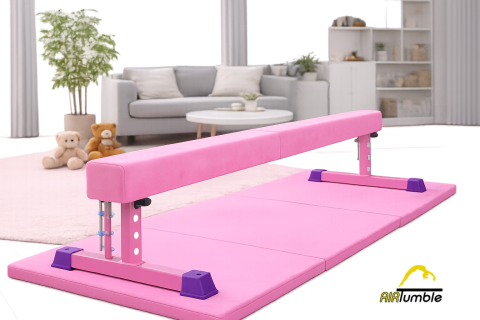
A well‑designed folding gymnastics balance beam provides stability without intimidation. Foam layers and non‑slip finishes help gymnasts trust their footing.
That trust matters. When gymnasts feel safe, they practise more consistently, and consistency leads to progress.
Training at Home Without Compromising Technique or Safety
Home training works best when it mirrors club habits.
Creating a Safe Practice Space
Choose a clear area with stable flooring. Make sessions brief and concentrated. Beam training doesn’t need long routines. Quality is more important than quantity.
Parents play a crucial role in this. A steady and calm approach to coaching and routines helps young athletes remain at ease.
When a Gymnastics Beam at Home Makes Sense
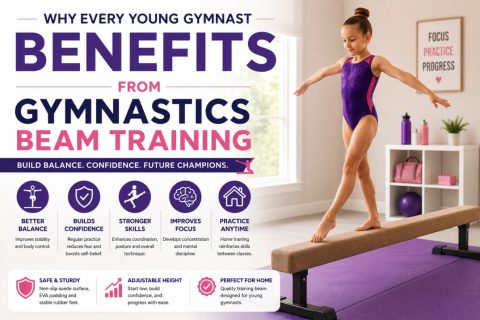
A gymnastics beam at home supports repetition between lessons. Simple drills like walking patterns, pauses, and turns reinforce what gymnasts learn at training.
Families across the UK often choose lightweight beams that fold away easily and suit shared spaces.
How Balance Training Helps Beyond Gymnastics
Balance work benefits children far outside the sport itself.
Cognitive Benefits of Balance Training
Mental focus improves when children practise balance regularly. Teachers and coaches often report better attention and calm behaviour after structured physical activity.
The ability to stay composed under pressure is valuable in school, sports, and daily routines.
Multi‑Use Training Benefits
Balance beam training supports cheer routines, dance coordination, and martial arts footwork. Many clubs include gymnastic balance beams as part of broader skill sessions.
Choosing the Right Beam for Confidence‑Led Progression in the UK
Not all equipment supports learning equally.
What to Look for in a Gymnastic Beam UK Families Trust
Stability, height control, comfortable padding, and reliable grip all matter. Equipment should suit beginners while allowing progression.
Why Adjustable and Foam‑Based Designs Matter
Adjustable heights allow gymnasts to grow gradually. Foam construction supports safe repetition. Training clubs and home users across the UK often prefer these features for long‑term use.
This is where AirTumble Gymnastics Beams fit naturally into training environments, supporting junior gymnasts, schools, and clubs with safe, practical designs.
Training Focus Comparison Table
| Training Surface | Focus Required | Balance Challenge | Confidence Support |
| Floor routines | Medium | Low | Moderate |
| Low beam | High | Medium | High |
| Raised beam | Very high | High | Skill‑dependent |
Balance Isn’t Just a Skill – It’s a Mindset Built Step by Step
What stays with us long after routines end isn’t the height of the beam or the scores achieved. It’s the calm, control, and confidence learned along the way. That’s why the Gymnastics Beam remains one of the most valuable tools in training.
Beam work teaches patience. It teaches focus. And most importantly, it teaches young gymnasts to trust themselves.
Quality equipment supports that process. AirTumble beams help parents, coaches, and schools create environments where learning feels safe and steady, whether training in clubs or practising at home.
Ready to support balanced, confident training?
Choose equipment that builds calm, control, and consistency, and helps your gymnast grow with every careful step.
Frequently Asked Questions
Is the balance beam the hardest gymnastics apparatus?
Many gymnasts say yes because it tests calm, accuracy, and control at the same time.
At what age should a child start beam training?
Most start with floor‑level beams once basic coordination develops, often around early primary school age.
How can beginners improve balance on a beam?
Slow movement, repetition, and short sessions help most. Confidence matters more than speed.
Is practising on folding beams effective?
Yes. Folding beams allow regular, safe practice and support consistent learning.
Leave a comment