

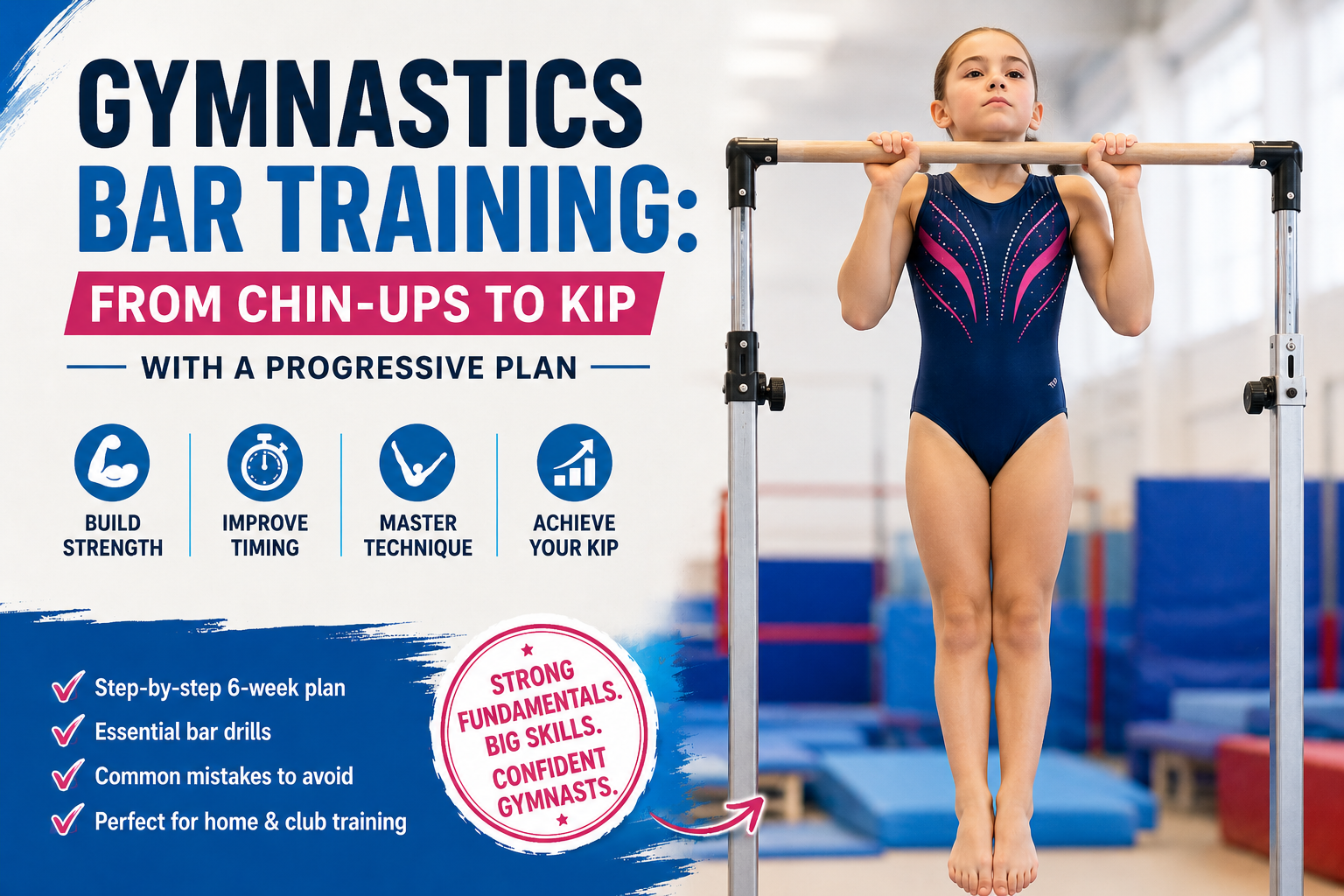
Gymnastics Bar Training: From Chin-Ups to Kip with a Progressive Plan

Objective
This guide will explain how gymnasts of all ages can go from simple strength training to doing the kip safely and effectively by using a Gymnastics Bar.
Key Takeaways
- A kip is built on strength, timing, and technique.
- Consistent gymnastics bar training helps children improve safely.
- Home practice can support club training.
- Short sessions often work better than long sessions.
- The right gymnastics training bars can help young athletes practise with confidence.
Introduction
Have you ever seen a gymnast effortlessly glide across bars and wonder how they managed to make it look so effortless? The reality is that every move starts with solid fundamentals, with consistent practice and the right equipment.
As per NHS guidance, children between the ages of 5 and 18 should be physically active every day for at least 60 minutes, including exercises that strengthen bones and muscles. This regular activity supports physical health, confidence, and movement skills.
Table of Contents
- Why the Kip Matters in Gymnastics
- Building Strength Before the Kip
- Essential Bar Drills
- A Six-Week Training Plan
- Common Mistakes to Avoid
- Choosing the Right Equipment
- Quick Daily Practice
- FAQs
Why the Kip Matters in Gymnastics
A kip is one of the first major skills gymnasts learn on the bars. It allows athletes to move from a hanging position into front support on top of the bar in one smooth motion.
What this really means is that the kip acts as a stepping stone for more advanced skills later on. Without it, moving forward in bar routines becomes much harder.
The kip combines:
- Upper body strength
- Core control
- Swing timing
- Body position awareness
Gymnasts who are young often get exuberant when they reach their first kip, as it signifies a significant improvement in their gymnastics training.
Build Strength Before Learning a Kip
Here’s the thing: many gymnasts struggle with the kip not because they lack effort, but because they need stronger foundations.
A good Gymnastics Bar routine starts with basic strength work.
Key Exercises
| Exercise | Purpose | Suggested Repetitions |
| Chin-Ups | Build pulling strength | 3 sets of 5 |
| Active Hangs | Improve grip and shoulders | 20 seconds |
| Hollow Holds | Strengthen the core | 20 seconds |
| Leg Raises | Improve body control | 10 reps |
| Front Support Holds | Develop stability | 15 seconds |
Regular gymnastics bar training helps children gain the strength needed for more advanced movements.
According to the UK Chief Medical Officers’ guidelines, muscle-strengthening activities should be included at least three days each week for children and young people. Gymnastics is specifically named as an activity that supports this goal.

Essential Drills on a Gymnastics Bar
As strength increases, gymnasts are able to begin exercises that are specific to their skill.
Glide Swings
Glide swings are a great way to teach body position and timing. A powerful glide helps create the momentum required to perform the Kip.
Front Support Holds
This drill helps gymnasts become comfortable supporting their body weight above the bar.
Cast Drills
Casts improve body tension and prepare gymnasts for future bar skills.
When practising on gymnastics training bars, focus on quality rather than speed. Five good repetitions are often more valuable than twenty rushed ones.
From Chin-Ups to Kip: A Six-Week Plan
Learning a kip takes time. Breaking practice into stages makes progress easier.
Weekly Progression
| Week | Focus Area |
| 1–2 | Chin-ups, active hangs, hollow holds |
| 3–4 | Glide swings and front support |
| 5 | Assisted kip drills |
| 6 | Independent kip attempts |
Parents frequently inquire about what time it takes to master a kid. The answer can vary. Gymnasts who are fast can do it in just a few weeks, while others require several months. It’s more about consistency than speed.
Real-Life Example
Emily is a gymnast aged nine from Manchester, trained on the bar in her home 3 times a week, in addition to club workouts. In the course of six weeks of concentrated training, she mastered her first kip while under her coach’s guidance.
Her parents noticed not only stronger skills but also greater confidence during training.
Common Mistakes That Slow Progress
Even gymnasts who are motivated can experience setbacks. Here are some of the most common problems:
Relying Only on Arm Strength
A kip is not simply a pull-up. Timing and body position matter just as much.
Skipping Core Work
Strong core muscles help gymnasts maintain proper form throughout the movement.
Practising Without Rest
Young athletes need recovery time. Rest days allow muscles to adapt and grow stronger.
Using Equipment That Does Not Fit
Adjustable gymnastics training bars allow growing gymnasts to train safely at the correct height.
Choosing the Right Gymnastics Bar for Home Practice
When choosing the Gymnastics Bar Safety should be first.
Find features like:
- Adjustable height settings
- Stable construction
- Designs that fold to allow for storage
- Compatibility with mats for safety
Many families opt for training bars for home due to the fact that they permit extra time in the gym, while still fitting into the daily routine of family life.
AirTumble has adjustable bars that are designed for gymnasts in their early years who need secure and reliable practice at home. Mats and bars can be used together to provide an additional layer of security during the course of training.
Your 10-Minute Daily Kip Builder
If you’re looking for a simple routine, try this:
- 5 chin-ups or assisted chin-ups
- 20-second active hang
- 10 hollow rocks
- 5 glide swings
- 3 front support holds
Repeat this routine three times per week.
Short, focused sessions often produce better results than occasional long workouts.
Small Steps Lead to Big Skills
Each great gymnast begins with the fundamentals. The kip might seem daunting initially, but constant training, perseverance, and proper gymnastics bar instruction will make it possible.
Whether your child is training at a gym or is using bars for training at home, each class develops strength, skills, and self-confidence. With the right guidance and equipment, the progress will be easy to track and enjoyable.
Ready to help your gymnast’s youngster build strength and develop new abilities?
Explore AirTumble‘s selection of Gymnastics Bar products to create a safe and secure home practice area that encourages constant progress.
FAQs
1. What age is suitable for a home gymnastics bar?
Children aged five and over can utilise an indoor gymnastics facility if supervised by an adult, and follow the safety guidelines.
2. How long does it take to learn a kip?
The timeframe for learning varies. Gymnasts who learn in weeks, while others require more than a month of practice.
3. Are training bars for home safe?
Yes, provided they are stable, age-appropriate, and used with suitable mats and supervision.
4. Which exercises help improve bar skills?
Chin-ups, hollow holds, active hanging, slide swings, and front drills for support are all designed to help with Bar development.
5. Can home practice replace gymnastics classes?
Home training works best alongside coaching, helping gymnasts practise skills between lessons.