


Objective
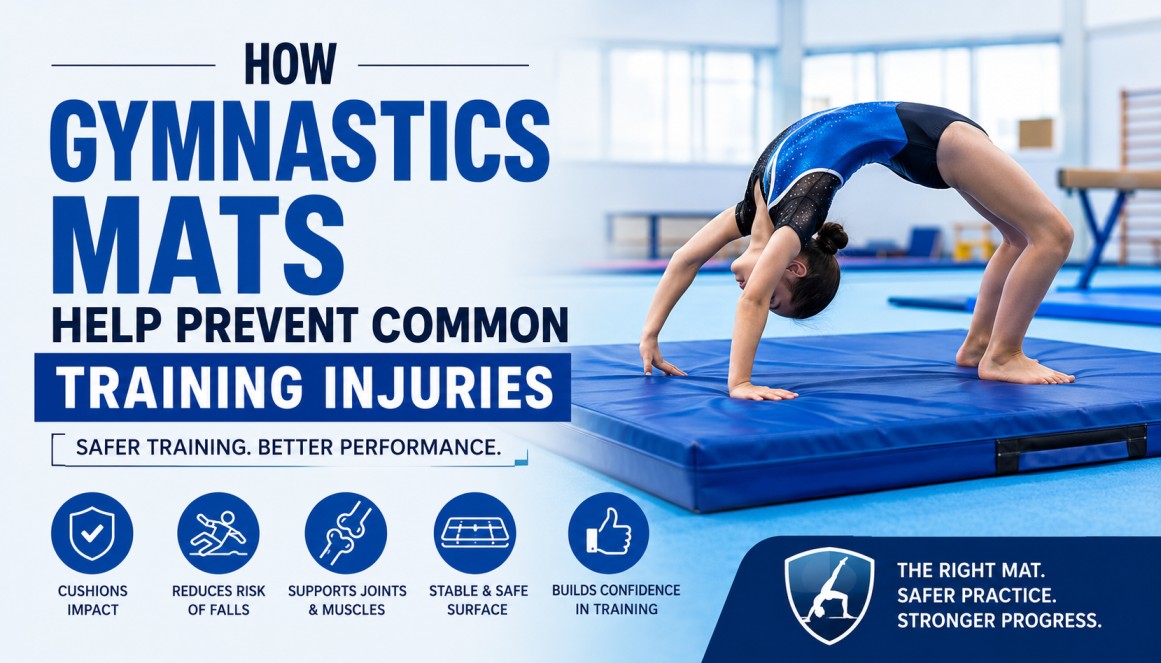
The goal of this blog is to show the ways a gymnastics training mat can help you practice more safely and prevent injuries during training that could be incurred, and how to select the best mat for your requirements.
Key Takeaways
- A suitable gymnastics mat provides cushioning for training and landing.
- Different skills require different types of mats.
- An inflatable gymnastics mat can provide a consistent, air-cushioned surface for tumbling.
- A mat can help reduce certain risks, but it cannot prevent every injury.
- Good coaching, correct technique, warm-ups, rest and suitable equipment all matter.
Introduction
A hard floor may seem fine for a quick cartwheel or tumble, but repeated jumps, rolls and landings can place considerable stress on a gymnast’s body. The right gymnastics mat gives you a more suitable training surface, helping cushion movement and make practice more comfortable.
Did you know? A study involving researchers from Cardiff Metropolitan University examined injuries in young gymnasts aged 6–17 and found that gymnastics has a history of high injury incidence, highlighting the importance of effective injury-risk reduction strategies for young athletes.
Table of Contents
- Why Does Gymnastics Put Stress on the Body?
- How Does a Gymnastics Mat Help Reduce Injury Risk?
- Which Common Training Injuries Can Mats Help With?
- Gymnastics Mat vs Inflatable Gymnastics Mat
- How to Choose the Right Training Mat
- How to Use Your Mat Safely
- FAQs
Why Does Gymnastics Put Stress on the Body?
Gymnastics combines strength, balance, flexibility, jumping and rotation. Repeating these skills places regular demands on the body.
Repeated Landings
Every landing sends force through the lower body. Knees and ankles may be placed under greater stress when skills are repeated on a hard surface.
Weight-Bearing Skills
Handstands and other movements place pressure through the hands and wrists. According to the AAP, some gymnastics movements can put 2 to 4 times body weight through the wrists.
Falls and Awkward Landings
Even a skilled gymnast can lose balance while learning a new movement. A padded training area gives you a more forgiving surface than bare flooring.
How Does a Gymnastics Mat Help Reduce Injury Risk?
A mat is not a guarantee against injury. What it does provide is a surface designed for training, with cushioning that can make certain movements and landings less harsh.
Cushioning for Landings
A suitable gymnastics practice mat can absorb some of the force associated with landing and falling. This is particularly useful when you are learning floor skills or repeating basic movements.
A Stable Practice Surface
A suitable mat gives you a defined training area. Good grip and a stable surface can also help you maintain control while practising.
Air-Cushioned Training
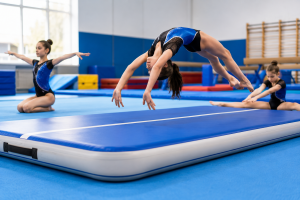
A gymnastics air mat uses air pressure to create a responsive training surface. AirTumble’s AirTrack range is designed for gymnastics practice and is available for home and club use.
More Confidence During Practice
When you know you are practising on suitable equipment, you may feel more comfortable repeating basic skills. That confidence should always be paired with proper coaching and sensible skill progression.
Which Common Training Injuries Can Mats Help With?
The goal is risk reduction, not a promise that injuries will never happen.
|
Training concern |
How suitable matting may help |
|
Hard landings |
Provides a more cushioned surface |
|
Falls |
Adds padding between the gymnast and floor |
|
Repeated tumbling |
Offers a consistent training surface |
| Ankle and knee impact |
May reduce the harshness of landings |
| Wrist stress |
Supports safer floor practice, although it cannot remove wrist loading |
Common gymnastics injuries can involve areas such as the wrists, shoulders, elbows, ankles and spine. The AAP also stresses that not every gymnastics injury can be prevented.
For younger athletes, rest is also important. The AAP notes that about half of sports-related injuries in children are linked to overuse, making recovery and sensible training schedules an important part of injury prevention.
Gymnastics Mat vs Inflatable Gymnastics Mat
Not every mat is designed for the same job.
Traditional Gymnastics Training Mat
A padded gymnastics training mat can work well for floor exercises, rolls, stretching and basic skill practice. Its main benefits include cushioning, easy placement and a clear practice area.
Inflatable Gymnastics Mat
An inflatable gymnastics mat or AirTrack can be useful for dynamic skills and repeated tumbling. AirTumble offers AirTracks in different ranges for home and club training.
Crash Mats
For landing-focused training, a crash mat provides additional cushioning. AirTumble’s Promat Crash Mats are designed for landing, tumbling and sports applications and use shock-absorbing PU foam with anti-slip panels on the base.
How to Choose the Right Gymnastics Practice Mat
Start with the skill you plan to practise rather than simply choosing the thickest mat available.
Consider:
- Skill: Different equipment is used for different levels of skill in basic floor work, tumbling, and landing practice.
- Space: Be sure to measure your training space before you purchase.
- Size: Ensure there is enough matting for the area you wish to practice.
- Cushioning: Choose equipment designed for the activity you wish to use it for.
- Storage: Foldable and inflatable equipment are available to use if space for storage is an issue.
- Frequency of use: Consider equipment designed to withstand more frequent and heavy use at your fitness club.
Airtumble’s crash mats are available in various sizes and thicknesses. Training facilities can make a selection based on their available space and needs.
How to Use Your Mat Safely
Before each session, check that the surface is clean, level and free from objects that could cause a fall.
If you use an inflatable mat, check the inflation pressure, valves and surface before training. AirTumble‘s training guidance also recommends clean, level ground, suitable pressure, enough space and a crash mat where needed.
Young gymnasts should train with suitable supervision. AAP guidance also recommends proper safety equipment and trained supervision for children practising gymnastics.
A Simple Home Example
Suppose your child is practising cartwheels and round-offs at home. A suitable gymnastics practice mat creates a dedicated cushioned area. If training progresses to repeated tumbling, an inflatable option may provide a different surface better suited to those movements.
The key is simple: match the equipment to the skill, training space and gymnast.
Give Your Training Area Better Support
The right gymnastics mat is more than padding on the floor. It gives you a purpose-built surface for practice and can help make landings and falls less harsh. But safe gymnastics also depends on technique, supervision, sensible progression, rest and well-maintained equipment.
If you are setting up a home practice area or improving a club facility, explore AirTumble’s gymnastics mats, AirTracks and crash mats to find equipment suited to your training needs.
FAQs
1. Do gymnastics mats prevent injuries?
No mat can guarantee that an injury will not happen. A suitable mat can provide cushioning and help reduce some risks associated with falls and hard landings.
2. How does a gymnastics mat reduce impact?
Padding and suitable construction can make a landing or fall less harsh than direct contact with a hard floor.
3. Are inflatable gymnastics mats good for tumbling?
They can be useful for dynamic gymnastics and repeated tumbling. The correct size, pressure, training space and supervision are important.
4. What is the best gymnastics mat for home use?
The best option depends on your available space, the skills being practised and how often the mat will be used. A foldable mat or inflatable option may suit different home setups.
5. Can children use gymnastics mats at home?
Yes, with suitable equipment, enough clear space and appropriate adult or qualified supervision. Children should not use gymnastics equipment as a substitute for proper coaching.


Leave a comment